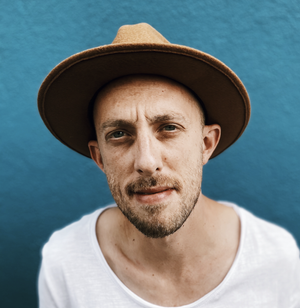
Why People Trust Some Media—and Tune Out the Rest | Memo Torres
{Transcript}
Why People Trust Some Media—and Reject the Rest
Memo Torres (00:00):
I honestly didn't know what the f*** I was doing for the first few days. I was just doing it—just doing the work. Legacy Media's approach is very much a "don't get too close," parachute journalism kind of style. You go into communities, get the information, do the report, and then get back out. And at LA Taco, what we do differently is that we are the communities. We get people from the communities; we get those voices. We entrench ourselves. We get to know the people that we write about. Which has helped me today to have that trust to do this kind of work that nobody else can do.
When Content Becomes Responsibility
CJ Casciotta (00:33):
Welcome to Reculture. My name is CJ Casciotta. This is a show in search of better messages. And we've spent the last couple of episodes talking about something pretty simple. Better messages don't just inform people. They move people somewhere. They send them on adventures. They repair myths. And all of that can still feel a little abstract until you start to see it show up in the wild. And from time to time, I want to bring you into conversations like that. And that's what this episode is. I sat down with Memo Tours from LA Taco.
If you haven't heard of them, they're one of the most trusted media voices in LA right now, and increasingly, everywhere. And what's interesting is they didn't set out to be a media brand. They started by telling stories about the food and culture scene in LA. But over time, as you'll hear in the interview, something shifted. People started trusting them, especially when things started to get really hard. And during that moment, people didn't just read their work; they turned to them for answers, for clarity, for what to do next.
And at some point, the stuff they were making stopped just being content and started becoming responsibility. And when that happens, people don't just listen, they rely on you. And that's the shift we've been talking about and Memo is living inside of that. And so this interview was recorded at our Reculture Live event in Los Angeles at the beginning of this year with my good friend and collaborator, comedian and activist Esteban Gast. So here is our interview with Memo Torres of LA Taco.
Before LA Taco covered ICE, it covered food and culture, and before that you were a landscaper. I wanna skip the whole timeline and instead just ask you, was there a moment when you stopped feeling like an observer of the city that you live in and started feeling responsible for it in a new way? Is there a moment that kinda shifted?
From Food Blog to Trusted Media Voice
Memo Torres (02:22):
Yeah, I spent six years writing about food, if you don't know, writing about the taco scene and street carts. And during that time, and through LA Taco, I always wrote about local organizations and communities, and that built a lot of trust with the community. So when everything started—like, you know, the s*** literally hit the fan—everybody was messaging me, DMing me, being like, "Yo, ICE is over here, what should we do?" "Hey, who do we call?" "How do we respond?" "How do I protect my neighbors?" Just floods of questions just started coming in. I'm like, "Okay." I told the team, I'm like, "Hey guys, I got all these questions. I think we need to cover this."
We just started feeling responsible. You know, our whole thing at LA Taco was celebrating the taco lifestyle, celebrating LA, celebrating our communities, and at this point, we're being attacked. We're like, "Okay, we can't be celebrating this right now. We need to come through for our communities." So yeah, at that point it just felt like people are looking to us for answers, for resources, and that's when that shift happened.
Esteban Gast (03:19):
Did you grow up like that? For you to be like, people are asking questions and you be like, you know what, we can be the ones to answer that. Where does that instinct come in? Because people, I'm sure, are asking questions to a lot of people. And you and the team were like, yeah, we'll do it. Where does that? That's so amazing.
Memo Torres (03:38):
Yeah, I've worked in nonprofits, fast food, restaurants, nurseries, construction, landscaping, and organizing with politicians. I mean, I've done it all. Even recording studios; I've worked on all kinds of stuff. So I have just enough experience in a lot of things to figure something out. So yeah, when this happens, I'm just like, "I know how to do video editing, this, or get resources." I have so many contacts all over the city.
People I went to school with or worked with in different places. It's just kind of easy to just pull from. If I need to figure something out, I know who to call. If I need to get a resource, I know who to contact. So yeah, I've just been fortunate. It almost felt like I was just meant for this moment.
The Failure of Legacy Media Trust
CJ Casciotta (04:20):
What's interesting is it's kind of happening in a moment where the rules are changing around journalism itself. From your perspective, how is it changing?
Memo Torres (04:31):
I think we've seen a failure in legacy media, and this is a conversation I've had with a lot of other journalists who kind of talk to me, you know, unofficially—off the record, I'd like to say. People from Channel 4, from legacy media, CNN, MSNBC—they've reached out to me and just kind of had these casual conversations that helped me understand what I'm doing, because I honestly didn't know what the f***I was doing for the first few days. I was just doing it, right? Just doing the work.
And they're like, "What you're doing is very different from legacy media." And the way they've helped me figure it out and understand it is that legacy media's approach is very much "don't get too close," right? Like parachute journalism. You go into communities, get the information, do the report, and then get back out. And at LA Taco, what we do differently is that we are the communities. We get people from the community. We get those voices. We entrench ourselves. We get to know the people that we write about.
Which has helped me today to have that trust to do this kind of work that nobody else can do. They say "don't get too close to the subject," and we're the opposite; we do get close. You know, we do understand who this is. We know the people, the families, their histories. And to us, that's very vital. I think legacy media now has lost that touch with communities. I've literally been out there at events, at the raids, and I've seen Telemundo, I've seen KTLA 5, ABC, and especially Fox. They'll show up to try to get information and interviews, and the community will be like, "What the f***? Get out. We don't want you here." I show up, and they're like, "Oh my God, it's Memo."
Influencers vs Journalists: The New Trust Problem
CJ Casciotta (06:16):
So what are some things we could kind of do away with when it comes to traditional media? Is there anything that's worth keeping, especially when it comes to ethics and stuff? Because I think where I sit, I always wonder. I'm like, "Okay, this is great. We've removed all these barriers to entry and we can get really close now," but then you have these figures who may not be in good faith, who are now these sort of influencer news people. They might be comedians, they might be different types.
Journalism is not their main gig but because they have an audience and the barrier to entry has been removed people are coming to them for a sense of journalism. Where is that? That's a huge question. But do have any thoughts on like where that line is?
Speed vs Accuracy: Why Being First Doesn’t Build Trust
Memo Torres (07:00):
So yeah, what we're seeing right now is like a video-on-TikTok culture. And it's something we've been working on at LA Taco. We have something called the LA Taco Media Lab. And we're trying to bridge the opposites of influencer videos' effectiveness and journalism ethics, right? There's influencers out there that do great work, but sometimes they just jump the gun. They don't really verify information. They say, "I heard from a credible source," which is bulls***.
You know, and they spread information. Sometimes it's fear-mongering or it's not accurate. And I'm not saying that to talk smack about them; I know they're trying to do their best. But then journalism is more like, "We have to be careful to make sure things are super verified." We're accurate. In traditional journalism, it's about being the first to get the scoop, break the story, or be on the scene, because the first one usually gets all the traction. For us, it's more like we've learned that our audience is looking to us for credibility—for the actual truth, things that are verified. So it's like, hold on to the story. We don't have to be first. Make sure that what we're reporting is solid. Sometimes we debunk some other media stories or correct them a little bit. I've been on the scene where I've corrected anchors live, like, "Bro, that's not right." There was a shooting in Ontario where they shot a 21-year-old US citizen who was trying to tell ICE agents that there were kids coming and asking if they could move. And the guy freaked out and shot him.
He still had the bullet in the shoulder when he was detained. But the guy on the scene, ABC 7, was like, yeah, nobody was shot, nobody was hurt. I'm like, bro, he's literally at the hospital. What are you talking about? But back to the point, we're working with USC. Our chief editor, Javier Cabral, has a class where he's trying to bridge and educate new journalism on how to take effective influencer techniques with charisma, great video editing skills, and put some journalistic ethics behind that.
So I think that's the future.
Hybrid Reporting: The Future of Media
Esteban Gast (08:54):
Yeah, but that big s*** for you guys then that big like paradigm shift is like going to people. How would you define what you do? It feels like it's it's like building trust with people. It feels like it's like viewing it through the lens of people on the ground. It but like how do you define that? And is that something that you guys at LA Taco talk about? Like are you like, hey, let's remember when we're talking when we're going to stories. Here's our values.
Is it that we start with the working-class people, we chat with them, and then we build it up from there? Or does it just happen because of your lived experience? How does all this happen?
Memo Torres (09:28):
So what we have now, we call it like hybrid reporting. More. Yeah, it's basically hybrid reporting where even if we go social media first, go to a video first to report something, we still back it up on the site with a full explanation, a more detailed explanation for people that do read. And we're finding that that's effective. People are actually going to the website to be like, I want to learn more. And that's been getting our readership up.
CJ Casciotta (09:31):
So here's a question, who pays for all this? I we have a legacy media that we know all the issues with that, the over-corporatization of that. How do we fund this kind of work?
Who Funds the Truth? Member-Supported Media
Memo Torres (10:06):
Yeah, we're member-supported 100%. When we were super broke, we tried going with sponsors. At one point, we had Goya Foods as a sponsor. That was during Trump's first presidency, and the CEO of Goya went to the White House for a Hispanic business meeting and was super supportive. They had a huge backlash, and I remember the whole time we were dealing with Goya, they're like, "Can you not put our video work next to your articles about police corruption?" They wanted to try to influence our journalism. We're like, "Nah, dude, that's not the deal. We're going to report on whatever we want and however we want." So that was problematic. We ended up sending them a letter saying "thanks, but no thanks" and sending them their money back.
Yeah, we, you know, that's the ethics that we hold on to, you know? Like we have to, journalism, the stories we tell cannot be compromised at all. And so for that, the best form of support is members, people. The only people we're accountable to are the people that we're writing for.
CJ Casciotta (11:16):
I think there's gonna need to be an education shift of like hey if you want the truth you're gonna have to support the truth and are we gonna see like a patreon, more like a patreon type model?
Why People Must Support the Media They Trust
Memo Torres (11:26):
I don't know about the Patreon model, but the membership model—the subscriber model—that's definitely been effective. And it's amazing to see. We went from having 1,500 members to almost closing last year. We announced it; we were like, "We"re going to shut down because we just ran out of money and we're super in debt." And within a day, LA just said, "No, you guys can't go away." And then we got 2,000 members, we got all of these donations and funds, and we were literally back online the next day. I think what's amazing is when we post articles on social media, it's like we have an army of dedicated, loyal supporters. But the most beautiful part about it is that people will send us messages and be like, "This is why I'm paying, this is why I'm supporting." They feel like they're a part of the work we're doing, which is making a change.
Esteban Gast (12:15):
Do you think that's a little bit of the, if we talk about the future of storytelling and journalism, like it is more people supported, members supported. Like if, like if someone's like, I'm really interested in what journalism looks like, I'm a young person who's thinking about this. It's great. The newsrooms that are supported by whatever monthly paying members are the ones that you believe will thrive into the future and or be like hold power accountable in a way or whatever.
The Future of Journalism Is Community-Supported
Memo Torres (12:40):
Well, it has to be. It has to be. I mean, it used to be that newsrooms were sustained by ad revenue. Google took all that. Google takes all the ad revenue. We get chump change, literally. They'll take $95 and we might get like three cents. So it has to be this. I think people need to realize that your money counts. And if you want a paper that's going to write for the people, it needs to be supported by the people. It's real simple.
Esteban Gast (13:08):
⁓ are there questions? We've got some questions. ⁓ yeah.
How Trust Turns Audiences Into Participants
Memo Torres (13:18):
We get members who send us a lot of tips. We have members who are in a lot of places, so we have "inside people" on the inside now, I guess I could say. Through relationships that we have with community members, we just have a lot of trust. People come to us, and a lot of times people will be like, "Dude, this other media outlet wrote about this, but we want to know your take on it." We're like, "Well, they already covered it." They're like, "No, we want you guys to look at it." Like, "Alright, we'll look at it and see what we find." So stories come from everywhere.
Esteban Gast (13:47):
Is that like, is that trust to me when I think of trust, think only time can kind of build trust. Like how do you think, right? You keep saying, hey, trust is this like beautiful gift that you have, which is also so cool that a paying member is also offering new stories. Like that's another way to show up and participate and contribute. But like, yeah, the way I think about trust is just time. Like I'm like, huh, how do you build trust with someone is just like time. And then I...over time see that they're trustworthy? Like how do you think about that? Yeah, trust.
Why Trust Takes Time (And Can’t Be Bought)
Memo Torres (14:21):
I think people don't realize—I mean, our main mission was always to be trustworthy, to be verified, and for our articles and journalism to be bulletproof. People also liked the angle that we took—the way we wrote stories from the community. We're not coming in like an observer and trying to have a "take" on a community organization without actually getting that person's perspective and having them explain it.
I think them knowing that they can trust us with that is super important. That took years. That took a lot of groundwork. Yeah, that's the kind of trust you can only earn; you can't buy. We have an event once a month called Taco Madness, and it's beautiful. This last one was almost all members. Everybody feels like they're part of this community, and I think that's what we're building here. We're this community in LA of people that love this city, want things to be told, and want to understand what's going on. They want to know where to have a good taco and what City Hall is doing.
CJ Casciotta (15:22):
It's really all I want out of life. It's a really good point though about traditional media. It almost reminds me of the film—you ever see the film Patch Adams with Robin Williams? It's all about the emotional distance that you're supposed to have as a clinician or as a doctor, but he sort of breaks that fourth wall, so to speak. And we understand what that distance is supposed to do, whether we're a doctor or a reporter, but you are sort of breaking that fourth wall yourself and going, "No, I can be close to this story. I can practice empathy and also tell the truth." I'm just really curious: can you maybe point to a moment where you felt like you were able to do that well? Because I think that's what maybe the old guard or traditional journalists might be scared of. They say, "Well, if I get too close to this, then I'm not going to be truthful. I'm not going to be clear and objective."
Who Gets Humanized in the Media—and Who Doesn’t
Memo Torres (16:22):
I always noticed how when they would go into communities and report on people, they would maintain that line of distance, right? Report and then leave. But then all of a sudden, they'd have like a full 60-minute feature on these billionaires: "Let's get to know the family. Let's get really close to these people." It's like, why are they getting really close to these big, powerful people? They want you to feel close and empathize with them and be like, "They're humans just like us."
And yet, when they're reporting on somebody in the community, it's like, "No, this is just what happened. He's a 36-year-old male." You have certain people that you can get close to, but communities that you can't. It's all bulls***.
Why Media Gets Close to Power—but Not People
You go to your local coffee shop, your local restaurant, right? And there's a whole business model that like the customer, person that has to register or whoever's running the business has to be like the customer's always riding, you to be very professional and you know, you're like, here's your coffee, thank you sir, you know. But come on, like how many of you guys don't go to your local spots and you know the cashier, you know the owner, right? You know the waitress, you know, you build these relationships, it's nice, now they're part of your community, you know, your neighbors. And that's really like for us, it's all about like, they're not just somebody working to register, it's you know, Anita, you know, like and she's got kids, you know, it's not just.
A gardener that just comes and mows your lawn, you know? Like, this is Juan, you know? So it's like, even the maids or the people that take care of your kids, like, you know, you start building relationships. This is us. This is our world. So it's like, stop with the bullshit of like, trying to keep people separate. Acknowledge that we're all people in community together. Sorry, I just went on a rant.
The Real Question: Who Gets Dignity in Journalism?
Esteban Gast (18:01):
That's such a beautiful question of like who's afforded dignity in journalism.
CJ Casciotta (18:07):
I think what I'm realizing is there's a certain kind of truth that can only come from knowing somebody well. So thank you for letting us get to know you a little bit, Memo.